



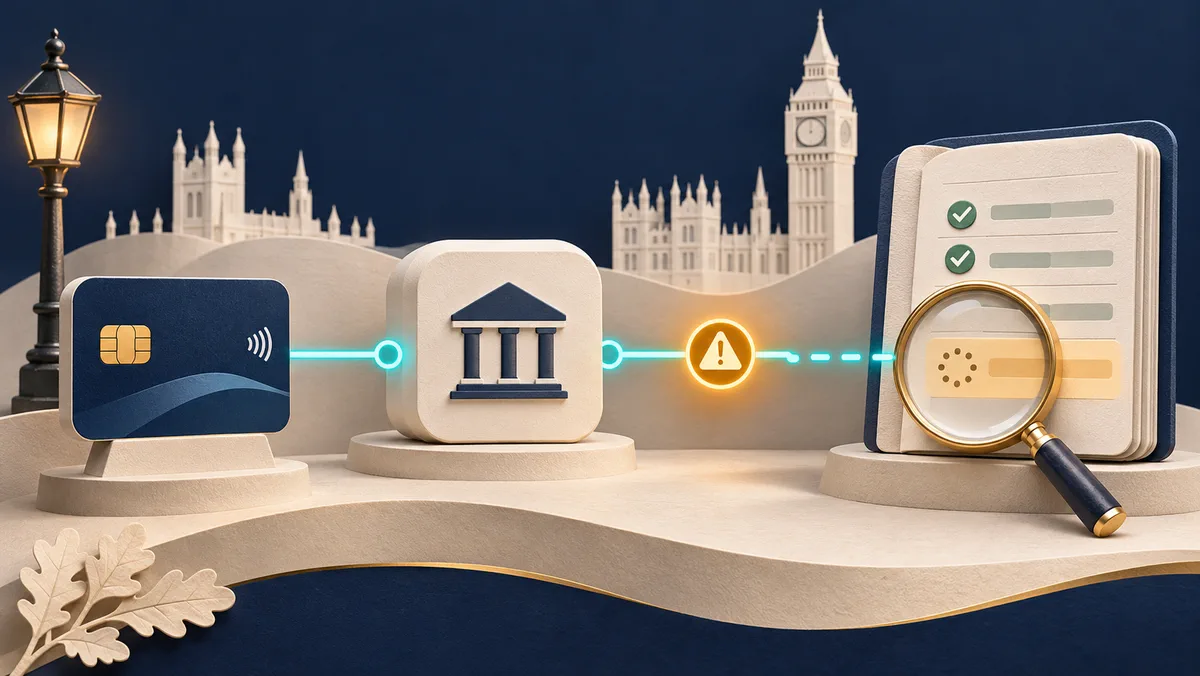
Three different things a cashier can mean by 'bank transfer'
Much of the confusion about bank payments at casinos comes from one label covering three mechanisms. They share the same underlying rail, Faster Payments, but they behave differently when something goes wrong, so it pays to know which one is in front of you.
| Route | How you start it | Who types the details | Typical use |
|---|---|---|---|
| Manual bank transfer | You log in to your bank and send money to the casino's sort code and account number with a reference | You | Deposits, often larger ones; less common than it used to be |
| Pay by Bank (open banking) | You pick your bank in the cashier, are passed to your banking app and approve a pre-filled payment | Nobody; amount, payee and reference are filled in for you | Deposits; at some sites payouts as well |
| Bank payout | You request a withdrawal and the casino sends money to your account | The casino, using details you supplied or captured from a deposit | Withdrawals |
A manual transfer depends on you copying a reference correctly. Pay by Bank removes that risk because the payment is built by a regulated payment initiation provider and you only approve it. A bank payout runs in the opposite direction and is controlled entirely by the casino until the moment it is sent.
When a help page or a review says a site accepts bank transfer, find out which of the three is meant. Our separate pages on bank transfers and tracing and Pay by Bank go into each mechanism; this page is about choosing between them and knowing what to expect on timing.
Making a bank transfer online casino deposit, step by step
Pay by Bank
- Open the cashier, choose the bank payment option and enter the amount.
- Select your bank from the list. If it is missing, the route is not available to you at that site.
- You are passed to your banking app or online banking. Log in as you normally would, with your fingerprint, face or passcode.
- Check the payee name, the amount and the account the money will leave from. Approve once.
- You are returned to the casino. The balance normally updates within seconds.
You never give the casino your banking login. The approval happens inside your bank's own app, and the provider that connects the two must be authorised by the Financial Conduct Authority. If a page asks you to type your online banking password into a form on the casino site itself, close it.
Manual transfer
- In the cashier, choose bank transfer. The site shows a payee name, sort code, account number and a reference unique to you or to this deposit.
- In your banking app, set up a new payee with those details. Your bank will run a Confirmation of Payee check and tell you whether the name matches the account.
- Enter the reference exactly as shown, with no extra words. This is how the casino matches the money to your account.
- Send the payment and keep the confirmation screen.
- Wait for the casino to allocate it. The money usually reaches the casino's bank within minutes; allocation to your balance can be automatic or done by a finance team in working hours.
If Confirmation of Payee reports that the name does not match, stop and check with the casino's support through the site, not through a number or link in an email. A no-match warning is exactly the situation the check exists to catch.
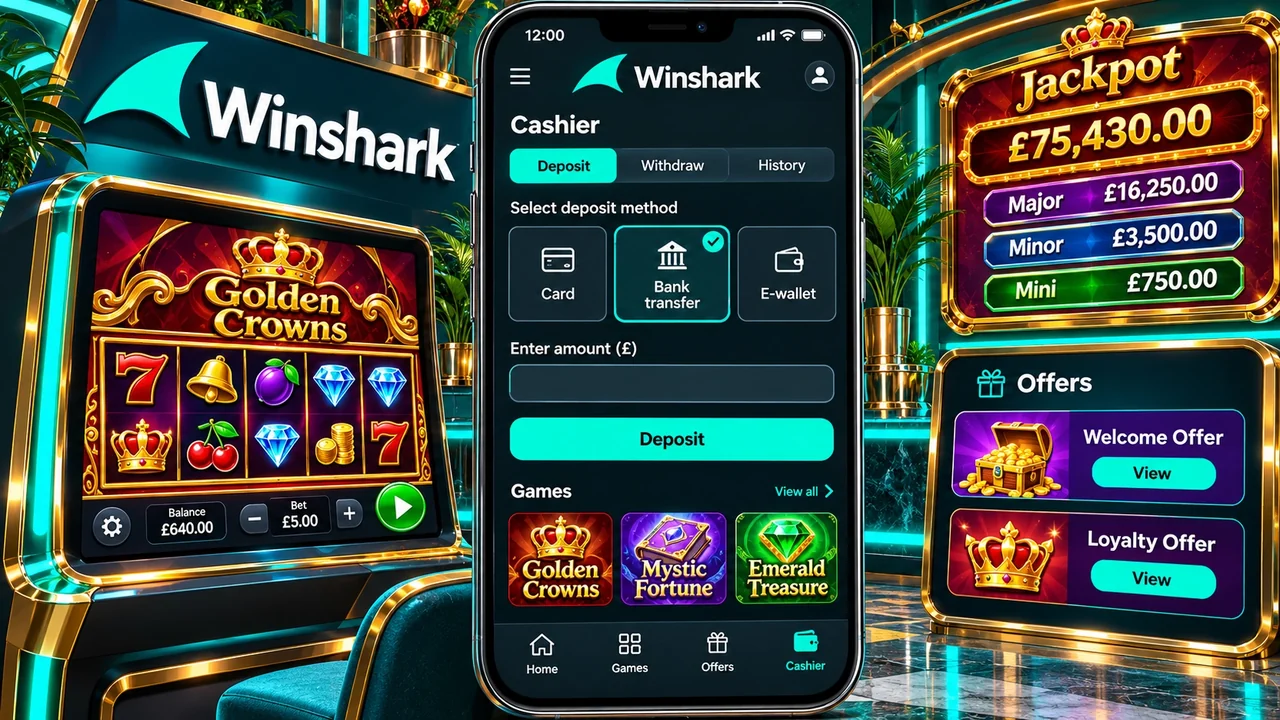
How fast is it? The clock at each stage
Faster Payments runs every day of the year, around the clock. Most payments arrive within seconds or minutes, and the scheme's own guidance is that a payment can take up to two hours. The rail is rarely the slow part. The stages on either side of it are.
| Stage | Who controls it | Usual pace | What can stretch it |
|---|---|---|---|
| Your bank releases the payment | Your bank | Immediate | First payment to a new payee, an unusually large amount, a fraud review |
| Faster Payments carries it | The payment scheme | Seconds to minutes; up to two hours | Rarely anything |
| Casino allocates a deposit | The casino | Seconds for Pay by Bank; minutes to hours for manual transfers | Wrong or missing reference, name mismatch, manual matching outside office hours |
| Casino approves a withdrawal | The casino | Hours to a few days, per its published terms | Pending periods, verification, source of funds questions |
| Your bank credits a payout | Your bank | Minutes once sent | Incorrect account details, a closed or changed account |
One change from late 2024 is worth knowing. Banks are allowed to hold an outgoing payment for up to four working days where they have reasonable grounds to suspect fraud. Most payments are untouched, but a first large transfer to a gambling merchant from an account that has never made one can occasionally be paused while the bank contacts you. Answer the bank's message promptly and the payment is normally released.
Older rails still exist. A payout sent by Bacs takes three working days to arrive, and some operators' finance teams still batch payments that way. If a site quotes three to five working days for bank withdrawals, it is probably describing its own approval time plus a slower rail, not Faster Payments.
Is an instant bank transfer casino really instant?
For deposits through Pay by Bank, close to it. The payment is authorised in your banking app, sent over Faster Payments and confirmed back to the casino automatically, so the balance usually updates before you have put your phone down. A manual transfer is quick to arrive at the casino's bank but may wait for someone to match it.
For withdrawals the word needs unpacking. A site that advertises instant bank payouts normally means that once a withdrawal has been approved, the money is sent over a fast rail and reaches your account within minutes. The approval is the variable. It can be automatic for a verified customer making a routine withdrawal and manual for anyone whose request triggers a check. Two customers at the same instant bank transfer casino can therefore have very different experiences on the same day.
Before relying on a speed claim, look in the withdrawal terms for a pending period, for the hours during which payments are processed and for the words subject to checks. Then measure it once with a small withdrawal. If a payout has been showing as pending for longer than the terms say, our page on pending withdrawals explains how to work out which stage it is stuck at.
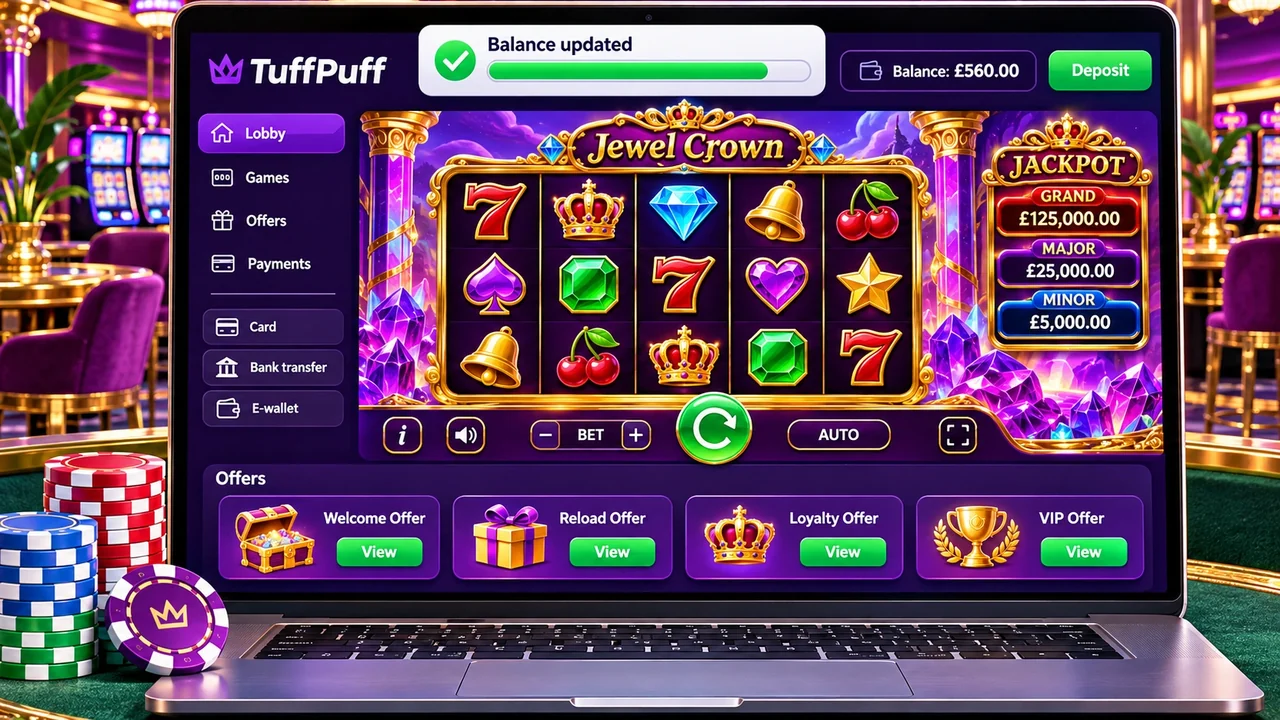
Withdrawing to your bank account
Casinos generally pay winnings back to the method used to deposit. This closed-loop approach is an anti-money-laundering measure, and it works in favour of bank users: if you deposited from your current account, that same account is the natural destination for a payout, already known to the casino and already in your name.
Three situations lead to a bank payout even when you deposited another way: your deposit method cannot receive money (a prepaid voucher, for instance), your card issuer does not support payouts to the card, or you have withdrawn more than the casino will return to the original method. In each case the operator will ask for your sort code and account number and for evidence that the account is yours, normally a recent statement or a screenshot from your banking app showing your name and the account details.
Identity verification should already be done. British rules require operators to verify customers before they gamble and say that a withdrawal should not be held up for identity documents that could have been requested earlier. Further checks on larger sums are a separate matter and are lawful; see withdrawal verification for what is normally asked.
Type bank details carefully. A payout sent to a mistyped account number is far harder to recover than one that was never sent. If your bank has changed since you registered, update the casino first; our page on changing your bank details covers the evidence involved.
Limits, fees and the small print
Two sets of limits apply to any bank payment, and the lower one wins.
- Your bank's limits. Faster Payments can carry up to £1 million in a single payment, but each bank sets its own ceiling for personal customers, often with a lower figure for mobile app payments and for payments made through open banking. Your bank's website lists them.
- The casino's limits. The cashier shows a minimum and maximum per deposit for each method, and the withdrawal terms give minimum and maximum payout amounts, sometimes per day or per month. Manual transfers often carry a higher minimum than Pay by Bank or cards.
Fees are uncommon. UK banks do not charge personal customers for sending or receiving Faster Payments, and licensed casinos seldom charge for bank deposits. Where a charge exists it is usually on the withdrawal side or applies to repeated small payouts, and it must be disclosed in the terms. The exception is currency: if either the casino account or the bank account is not in pounds, a conversion spread is applied somewhere along the way. Details are in fees, limits and currency.
Check your statement after the first deposit. The payee name shown by the bank is often the operator's legal company name or its payment provider, not the brand on the website. Knowing what it looks like makes later statements easier to reconcile.
Bank transfer compared with debit cards and e-wallets
| Feature | Pay by Bank | Manual bank transfer | Debit card | E-wallet |
|---|---|---|---|---|
| Deposit speed | Seconds | Minutes to hours | Seconds | Seconds |
| Details shared with the casino | None typed; account captured from the payment | None; you send to them | Card number | Wallet login or email |
| Risk of user error | Low | Higher: reference and payee typed by hand | Low | Low |
| Withdrawal route | To the same bank account where supported | To your bank account | To the card, where the card supports it | To the wallet, then on to your bank |
| Counts for welcome offers | Usually | Usually, timing permitting | Yes | Often excluded; check the terms |
| Chargeback or card protection | No card scheme protection | No card scheme protection | Card scheme rules apply | Wallet's own rules |
The trade-off is clear from the last row. A payment you authorise from your bank account is final in a way a card payment is not. That is acceptable when you are paying a licensed operator you have checked on the public register, and a strong reason not to use bank transfer with any site you have doubts about. Credit cards, for completeness, are not an option at all: they have been banned for gambling in Great Britain since April 2020. For a wider comparison see debit card versus e-wallet.
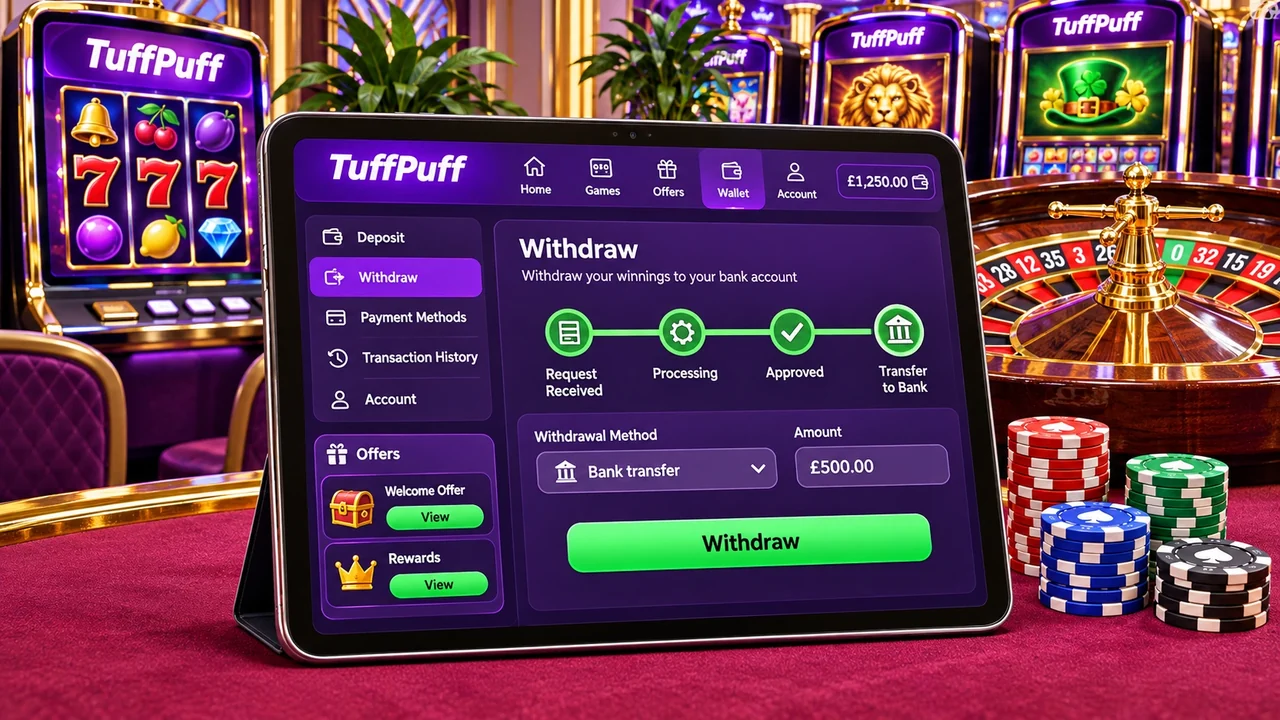
When a transfer goes missing: the triage order
Most missing bank deposits are not lost. They are sitting unallocated because the casino cannot tell whose they are. Work through the checks in this order before sending any more money.
- Has it left your bank? Look at the transaction in your banking app. Pending, held for review and returned each point to the bank; sent or completed points to the casino.
- Were the details right? Compare the sort code, account number and reference with the cashier screen. A missing reference is the commonest cause of delay with manual transfers.
- Whose account paid? A transfer from a joint account is normally acceptable if you are a named holder. A transfer from a partner's, a relative's or a business account will usually be rejected and returned, which takes days.
- How long has it been? Give a manual transfer until the end of the next working day before escalating. A Pay by Bank deposit that has not appeared after a few minutes is worth raising at once.
- Contact support with evidence. Send the date, time, amount, the reference used and a screenshot of the completed payment from your bank. Ask for the payment to be traced and allocated.
Do not repeat the transfer to see whether a second one works. You may end up with two unallocated payments. The fuller version of this process, with the wording to use, is on our missing deposit page. If a casino cannot locate a payment your bank confirms as sent and does not resolve the matter through its complaints procedure within eight weeks, you can take the dispute to its approved alternative dispute resolution provider free of charge; see complaints.
Who bank transfer suits, and who should pick something else
Bank payments suit players who would sooner not store a card with a gambling site, who want deposits and payouts to appear on one statement, and who make fewer, larger transactions. Pay by Bank is the better of the two deposit routes for almost everyone, because there is nothing to mistype.
They suit less well anyone whose bank is not on the casino's open banking list, anyone depositing small amounts below a manual transfer minimum, and anyone who values the dispute rights that come with a card. If your main aim is the quickest possible withdrawal, compare the site's stated approval times across methods first. The approval stage, not the rail, decides when you are paid.
Whichever route you choose, verify your identity at registration, make the first deposit a small one and run one modest withdrawal before larger sums are involved.
Gambling is for adults aged 18 and over. Only deposit what you can afford to lose.
Bank transfer casino payments: quick answers
How long does a bank transfer deposit take to reach a casino?
A Pay by Bank deposit normally shows in your balance within seconds. A manual transfer usually reaches the casino's bank in minutes over Faster Payments, but the casino then has to match it to your account, which can take until the next working day if it is done by hand.
Can I withdraw casino winnings by bank transfer if I deposited by card?
Often, yes. Casinos first return money to the deposit method, and where a card cannot receive a payout they pay to a bank account in your name instead. Expect to provide proof that the account belongs to you.
Is Pay by Bank the same as a bank transfer?
It uses the same Faster Payments rail, so the money moves the same way. The difference is in how the payment is created: with Pay by Bank the details are filled in automatically and you approve them in your banking app, whereas a manual transfer relies on you entering the payee and reference.
Why was my bank transfer to a casino returned?
The usual reasons are that the paying account was not in the same name as the casino account, the reference could not be matched, or the casino account was not yet verified. Returned payments go back to the original account, typically within a few working days.
Will my bank block a transfer to a gambling site?
Banks do not block lawful payments to licensed operators as a rule, but they may pause a payment for a fraud check, particularly a first or unusually large one. Respond to the bank's security message and the payment is normally released.
Do I pay a fee for a casino bank transfer?
UK banks do not charge personal customers for Faster Payments, and most licensed casinos do not charge for bank deposits. Check the withdrawal terms for any payout fee and bear in mind that currency conversion applies if either account is not in pounds.