




Short answer
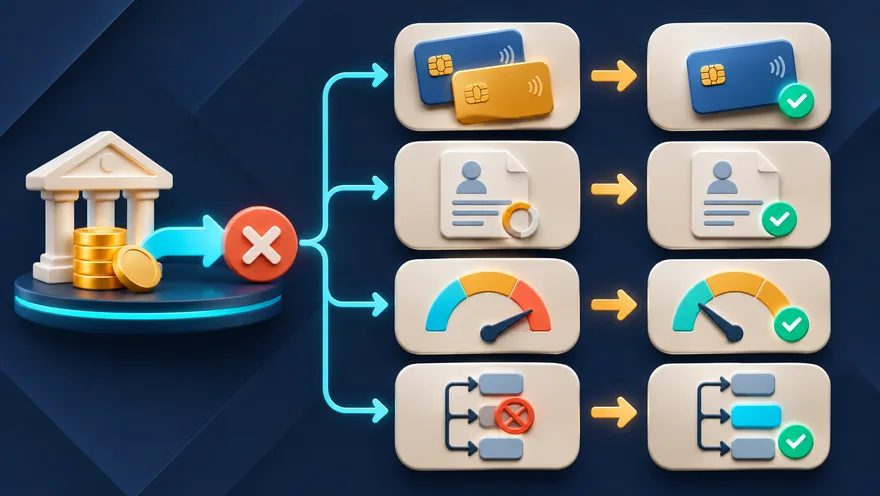
Closing an account ends the relationship with that operator. It is not the same as self-exclusion, it is not the same as a time-out, and it does not by itself stop marketing or block you elsewhere.
Do it in this order: withdraw the balance, confirm the withdrawal has arrived, set marketing preferences off, request closure in writing, and keep a copy of the confirmation.
If the reason for closing is that gambling has become hard to control, closure is the weakest of the available tools. Self-exclusion and the national scheme are the ones built for that, and the responsible gambling pages on this site link to independent help.
Deal with the balance first
A residual balance in a closed account remains payable in principle and is tedious to retrieve in practice, because the payout still needs verification, a valid route and sometimes a reopened case. Withdraw first and confirm arrival before requesting closure.
Where the balance is below the minimum withdrawal, ask the operator in writing how it will be paid on closure. There is usually a process, and asking in advance is faster than discovering it afterwards.
Keep the final statement or balance screenshot. It is the one piece of evidence that becomes impossible to obtain once access ends.
What closure does and does not do
It does end the account and your access to it. It usually ends the ability to deposit. It does not automatically delete your data, because operators have retention obligations, and it does not by itself end marketing unless preferences are changed or consent withdrawn.
It does not block you at other operators. Only the national online self-exclusion scheme does that across operators licensed in Great Britain, and it operates independently of any individual account.
And it does not reverse anything already in dispute. A complaint or an ADR referral survives closure, which is why the records should be saved before access goes.
| Action | Effect | What it does not do |
|---|---|---|
| Account closure | Ends access to that account | Does not block other operators |
| Time-out | Temporary block at that operator | Not permanent, not cross-operator |
| Operator self-exclusion | Longer block at that operator | Not cross-operator |
| National scheme registration | Blocks GB-licensed online operators | Does not close individual accounts |
| Marketing preferences off | Stops marketing | Does not close the account |
| Data deletion request | Addresses retained data | Subject to retention obligations |
Requesting closure properly
Ask in writing through a channel that produces a record, and state plainly: please close my account, confirm the closure, and confirm that the balance has been paid in full. Three sentences.
Ask whether closure is reversible and on what terms. Some operators will reopen on request; others require a fresh registration; where a closure is linked to a self-exclusion the position is different again and deliberately stricter.
Keep the confirmation. If marketing continues or an account reappears, the dated confirmation is the whole of the complaint.
- Withdraw and confirm arrival before requesting closure.
- Ask how a sub-minimum residual balance will be paid.
- Set marketing preferences off separately.
- Request closure in writing and keep the confirmation.
- Save the balance and withdrawal records before access ends.
Data after closure
Operators retain records for regulatory and legal reasons, so closure does not mean deletion. You can ask what is held and request erasure, and the operator must explain what it must keep and why.
Those requests go to the data-protection contact named in the privacy notice. The Information Commissioner’s Office is the supervisory authority if a request is ignored.
A data access request is also worth making if you are mid-dispute, because the records it returns can include the communications history you are relying on.
If closure is a harm-reduction decision
Closure is easy to undo — frequently a single request, sometimes a new registration — which makes it a weak control. If the aim is to stop gambling rather than to leave one operator, the stronger tools exist and are designed to be hard to reverse.
Operator self-exclusion blocks that operator for a set minimum period. Registration with the national online self-exclusion scheme blocks online operators licensed in Great Britain for the period chosen, and no operator can override it.
The responsible gambling pages on this site link to help that is independent of any operator and does not require an account, a dispute or a balance.
- Withdraw the balance and confirm it has arrived.
- Save the balance, withdrawal and correspondence records.
- Set marketing preferences to off.
- Request closure in writing and ask whether it is reversible.
- Consider the stronger tools if the aim is to stop gambling.
FAQ
How do I close a casino account?
Withdraw and confirm the balance has arrived, set marketing preferences off, then request closure in writing and keep the confirmation.
What happens to money left in a closed account?
It remains payable in principle and is harder to retrieve, because the payout still needs verification and a valid route. Withdraw before closing.
Does closure stop marketing?
Not by itself. Marketing preferences and consent are separate, and should be changed explicitly.
Does closure block me at other casinos?
No. Only the national online self-exclusion scheme blocks operators licensed in Great Britain, and it works independently of individual accounts.
Can I reopen later?
Often, on request or by registering again, unless the closure is tied to a self-exclusion — where the position is deliberately stricter.
Next pages
Sources
- UK Gambling Commission: Licence Conditions and Codes of Practice, checked 18 November 2026.
- Information Commissioner’s Office: your data rights, checked 18 November 2026.
- GAMSTOP: the national online self-exclusion scheme, checked 18 November 2026.